BLUE REFLECTION Quartet How to Play BLUE REFLECTION in Quartet
Master Hinako Shirai's school days, Otherworld dungeons, and Reflect battles in the 2017 remaster.
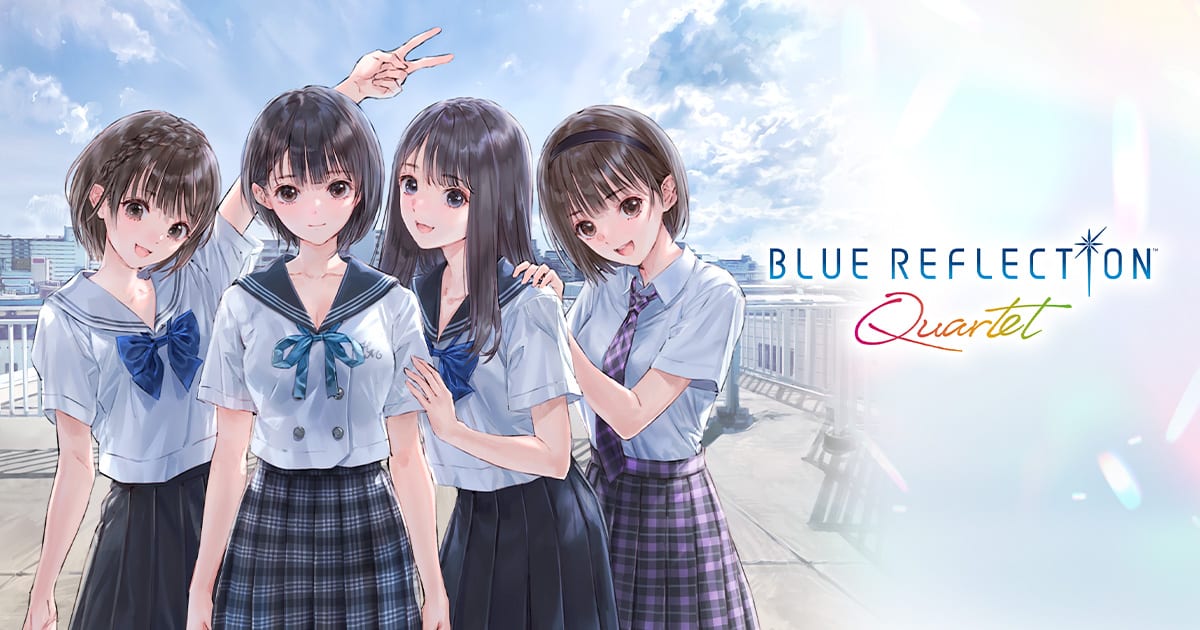
Role of BLUE REFLECTION in Quartet
The first icon in the recommended order is BLUE REFLECTION, Gust’s 2017 magical-girl school RPG starring Hinako Shirai. Quartet delivers a remaster with higher-resolution textures and compilation quality-of-life toggles—not a ground-up remake. Story beats, dungeon layout, and Reflect mechanics remain faithful, which makes this title the teaching module for everything RAY, SUN, and Second Light reference later.
Expect roughly the mid-20s of hours in a typical story run—part of the wider 70 to 80 hour compilation total. Start here if you are new; veterans replaying for the teased completion bonus should still skim QoL settings on QoL features before rushing Ether fights.
Daily loop: school mode versus Otherworld
BLUE REFLECTION alternates between school mode and Otherworld dungeons tied to emotional themes.
School mode
During weekdays you:
- Attend classes (light scheduling, not full stat sim depth)
- Build bonds with classmates through hangouts and story events
- Trigger character episodes that unlock support skills and narrative payoffs
- Manage fatigue and story gates that determine when dungeons open
Bond timing matters for endgame support options—cross-reference schedules on Characters and chapter availability on Walkthrough without spoiling ahead.
Otherworld dungeons
When story pressure peaks, Hinako enters corrupted spaces reflecting classmates’ fears. Dungeons feature:
- Navigation puzzles and collectible Ether fragments
- Regular encounters teaching guard, dodge, and combo timing
- Boss fights testing Reflect skill loadouts
Enable faster movement in hubs via compilation QoL when backtracking for optional chests.
Reflect transformations and hearts
Hinako becomes a Reflector—a magical girl avatar fighting with ethereal weapons. Reflect hearts gauge emotional sync with allies and influence transformation potency. Raise hearts by:
- Completing bond episodes before major dungeon spikes
- Winning battles without neglecting support skills
- Responding to story choices that align with Hinako’s empathy
RAY later shows the same arc through anime stills; playing BLUE REFLECTION first makes RAY’s condensed scenes feel like highlights rather than replacements—see Recommended play order.
Ether combat fundamentals
Battles blend real-time movement with ability cooldowns:
- Melee chains — build stagger on Sephirot-themed foes
- Ether skills — elemental finishers consuming gauge
- Support actions — heals, buffs, and link attacks from bonded classmates
- Guard and dodge — mandatory against telegraphed boss attacks
Turn on battle speed once you recognize enemy patterns—minimum PC hardware users especially benefit per Platforms and requirements. Deep math lives on Systems; this guide stays mechanical, not formula-heavy.
Autosave, manual saves, and Quartet rules
Autosave exists where the 2017 original supported it. Quartet does not import old PS4 or PC saves—start fresh. Manual save before:
- Chapter boss rushes
- Optional Reflector side quests
- Long school stretches where you might quit mid-schedule
Nintendo players: choose Switch or Switch 2 permanently—no save transfer between SKUs.
Subtitles, voice, and UI
Japanese voice carries Hinako’s performance; set subtitles to English, Japanese, Traditional Chinese, or Simplified Chinese in the launcher per Languages and audio. Keep UI language consistent when hopping to RAY after credits.
After credits: where to go
Follow the saga to How to play RAY for anime pacing, or jump against recommendation only if you accept spoilers. Open the Reference Database to compare Hinako’s relationship chart before Shiho’s arc in How to play SUN.
Tier planning matters less here than in sequel titles—still peek at Tier list if you carry habits forward.
Common mistakes in BLUE REFLECTION
- Ignoring school bonds until late dungeons, then lacking support skills
- Disabling all cutscenes on first run and missing Reflector motivation
- Assuming remaster QoL replaces learning dodge timing—bosses still punish greed
- Skipping the title entirely for Second Light—Ao dialogues assume Hinako literacy
Related pages
Getting started for launcher setup, Collection overview for remaster scope, Review for modern opinions, and Updates for launch patches affecting battle speed or textures.
Frequently Asked Questions
Quick answers to the most common questions.
Is BLUE REFLECTION in Quartet a remake?
No. It is a remaster with higher-resolution textures and compilation QoL. Gameplay structure matches the 2017 original.
How does Reflect combat work?
Hinako transforms into a Reflector, using melee chains, Ether skills, and support from bonded classmates. See Systems for advanced rules.
Should I max bonds before dungeons?
Prioritize bonds tied to upcoming story gates listed in Walkthrough and Characters to unlock support skills.
Does Quartet import my old BLUE REFLECTION save?
No. Progress starts fresh inside the compilation with no legacy DLC or save bonuses.
What should I play after BLUE REFLECTION?
Recommended next step is RAY—see Recommended play order and How to play RAY.